

Recipe Science and Culinary Logs
🧪 The Science of the Velvet Crumb: Dual Lipids & Buttermilk
Creating the ultimate vanilla cake is a delicate balance of moisture, flavor, and structure. Most standard cakes are either flavorful but dry (all butter) or moist but greasy (all oil). To resolve both, we combine the best of both worlds with a **dual-lipid system**: unsalted butter provides robust creaminess, flavor depth, and microscopic air cells during the creaming stage, while vegetable oil (which remains liquid at room temperature) acts as a persistent moisture shield, preventing the cake starches from drying out after baking. Furthermore, the inclusion of **buttermilk** is a chemical necessity: its natural lactic acid tenderizes the wheat proteins (gluten) by breaking down long peptide bonds. This results in a spectacularly soft, velvety, and tight-grained sponge that melts in your mouth and stays fresh for up to 5 days.
📝 From the Test Kitchen: Our Testing Logs
We baked multiple iterations to achieve the ideal balance of tenderness and structural strength for layering:
- Trial 1 (Dry & Crumbly): We used 100% unsalted butter and standard whole milk, mixing the dry and wet ingredients in two quick dumps. Result: The cake was flavorful but dried out significantly within 24 hours, crumbling heavily when sliced.
- Trial 2 (Heavy & Greasy): We tried 100% canola oil and omitted butter, creamed the sugar into the oil. Result: The cake layers were incredibly flat, greasy, and structurally weak, lacking any signature buttery aroma.
- Trial 3 (Absolute Perfection): We combined 3/4 cup of softened butter with 2 tablespoons of oil, creamed them with sugar for 3 minutes, and alternately folded in sifted cake flour and vanilla-infused buttermilk. Result: A highly-risen, perfectly flat-topped, buttery, and cloud-soft sponge with a gorgeous velvety crumb that layered beautifully.
🍳 Kitchen Equipment Checklist
- Two 8-inch Round Cake Pans: Metal pans are highly recommended to ensure uniform heat conduction and prevent dark, over-baked edges.
- Electric Hand Mixer or Stand Mixer: Critical for creaming the butter, oil, and sugar for a full 3 minutes until pale, light, and aerated.
- Parchment Paper Rounds: Essential to line the bottom of the pans to guarantee the delicate cake layers slide out cleanly without tearing.
- Sifter or Fine-Mesh Whisk: Necessary to aerate the flour and baking powder, eliminating any dense flour pockets in the batter.
⚠️ Troubleshooting & Playbook
Preventing Batter Curdling: When adding eggs to creamed butter, make sure they are strictly at room temperature! Cold eggs will freeze the butter fats, splitting the emulsion into curdled specks. If it curdles, simply whisk in a tablespoon of your flour to re-bind the emulsion.
Avoid Over-mixing: Once the flour enters the bowl, reduce mixer speed to low and mix *only* until the last streaks disappear. Over-mixing activates gluten bonds, which transforms a soft, velvety cake into a tough, bread-like structure.
Our Step-By-Step Cooking Guide
Follow these meticulously documented, kitchen-tested instructions to secure perfect results on your first attempt:
-
Step 1
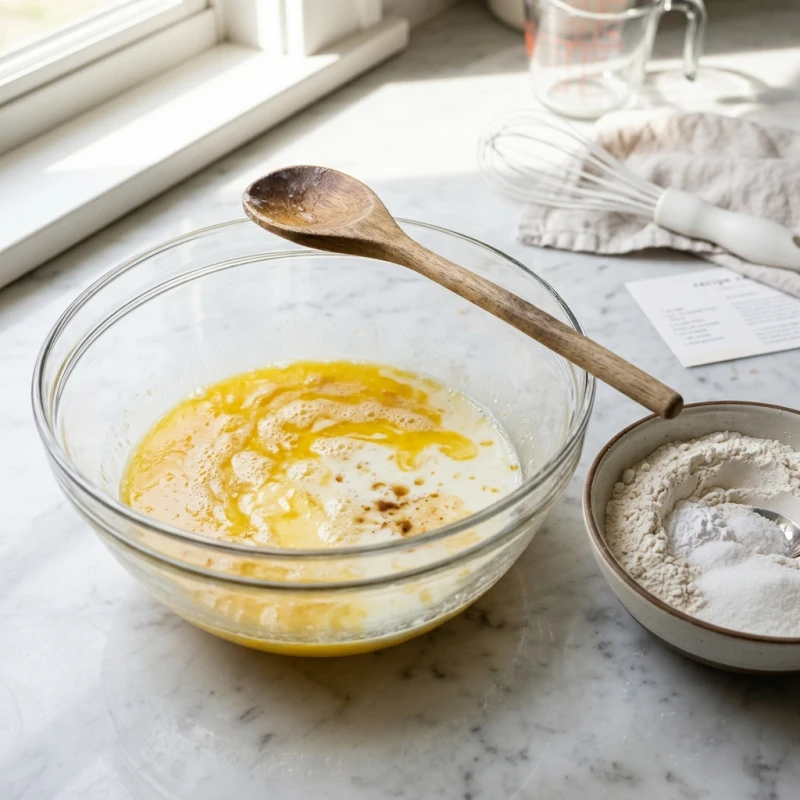
Preheat your oven to 350°F (177°C). Grease two 8-inch round cake pans and line the bottoms with parchment paper rounds. Sift together the flour, baking powder, and salt in a medium bowl; set aside.
-
Step 2
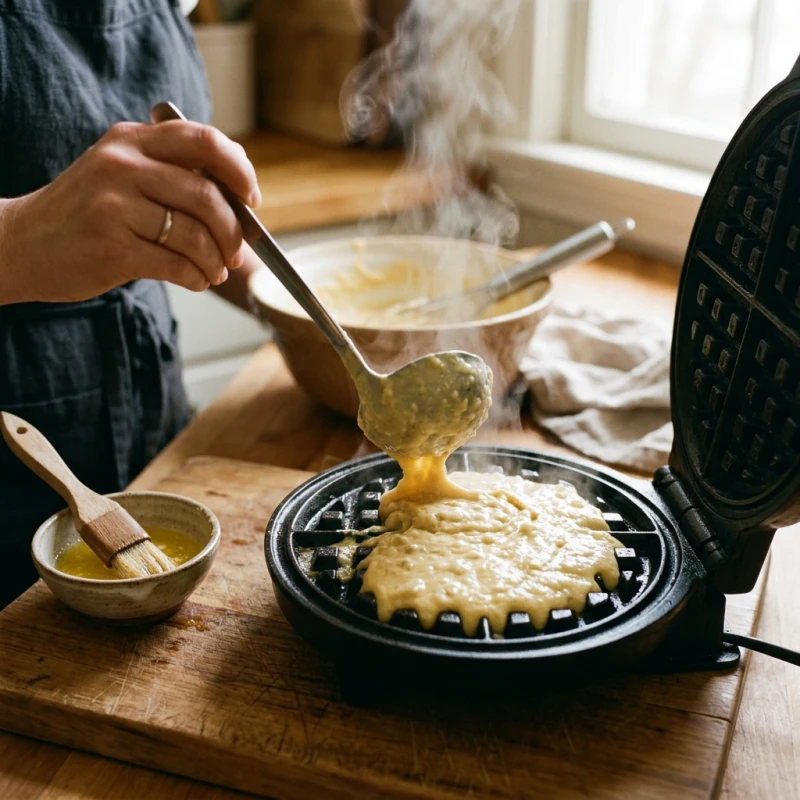
In a large bowl, combine the softened butter, vegetable oil, and granulated sugar. Beat with an electric hand mixer on medium-high speed for a full 3 minutes until pale yellow, light, fluffy, and aerated. Add the room-temperature eggs one at a time, beating well after each addition, then blend in the vanilla bean paste.
-
Step 3
Reduce the mixer speed to low. Alternately add the dry flour mixture and the room-temperature buttermilk to the creamed batter in three stages, beginning and ending with the flour. Mix only until the dry streaks disappear — do not over-mix. Divide the batter evenly between the prepared pans, smoothing the tops, and bake for 26 to 28 minutes until golden-brown and a toothpick inserted into the center comes clean. Cool in the pans for 15 minutes before transferring to a wire rack.
This is the absolute holy grail of vanilla cakes! The texture was so incredibly soft, velvety, and moist. The hybrid butter-oil trick combined with buttermilk works like a charm. It tasted exceptionally rich and buttery but remained perfectly soft and fresh for several days. Highly recommended!