

Recipe Science and Culinary Logs
🧪 The Science of High-Protein Emulsions, Micellar Casein Swelling, and Steric Emulsion Stabilization
A flawless high-protein smoothie must offer more than just a massive macro count; it must be a velvety, stable emulsion that is completely devoid of chalkiness, graininess, or rapid phase separation. Achieving this high-performance profile requires precise understanding of molecular protein-binding kinetics, emulsification mechanics, and polysaccharide steric stabilization:
- Casein vs. Whey Structural Mechanics: An optimal high-protein shake leverages a synergistic combination of fast-digesting **whey** and slow-digesting **casein** proteins. Casein proteins (primarily from Greek yogurt) exist in stable, spherical colloidal aggregates called **micelles** that are highly hydrophobic. Under high blending shear, these micelles unfold and swell, trapping vast amounts of water within their structures to establish a dense, rich, pudding-like viscosity. Conversely, globular **whey protein isolate** acts as a highly active surfactant. It rapidly migrates to the air-water interface to form a cohesive viscoelastic film that traps microscopic air bubbles, creating a light, aerated foam structure. Combining the two results in the perfect balance of creamy thickness and smooth, luxurious volume.
- Ionic Strength & "Salting-In" Solubilization: Pure protein powders often clump or fail to hydrate fully, leaving a gritty or chalky mouthfeel. By adding a tiny pinch of salt (sodium chloride) or utilizing the natural potassium-rich bananas and peanut butter, we increase the **ionic strength** of the continuous liquid phase. This triggers a thermodynamic phenomenon called **salting-in**, where the salt ions shield the protein molecules' electrostatic charges, increasing their hydration shell and overall solubility. This enables the proteins to unfold completely, preventing chalkiness and forming a stronger viscoelastic barrier that holds healthy lipids in a stable micro-emulsion.
- Oat Beta-Glucan Steric Stabilization: Ground old-fashioned oats provide soluble **beta-glucan** polysaccharide fibers. When blended, these fibers hydrate to form an extremely viscous, slippery gel. This gel acts as a powerful **steric stabilizer**—it physically coats individual fat droplets (from peanut butter) and air bubbles, preventing them from colliding, coalescing (merging), or separating, ensuring a completely uniform suspension that does not split or pool liquid.
- Masking Grittiness and Astringency: High concentrations of protein can feel gritty on the tongue. By employing a high-shear blend, we reduce the particle size below the human tactile threshold ($\sim$20 microns). Concurrently, the healthy lipids in creamy peanut butter coat oral taste buds and compete for salivary protein-binding sites, completely eliminating any residual dry astringency and delivering a rounded, rich peanut butter banana taste.
📝 From the Test Kitchen: Our Testing Trials
Our trials focused on eliminating chalkiness and achieving long-term emulsion stability:
- Trial 1 (The Chalky Separated Glop): We blended whey protein, whole oats, peanut butter, and milk on low speed for 15 seconds. Result: The smoothie was incredibly gritty and chalky. The oats were not broken down, leaving large cellulose flakes that got stuck in the straw, and the peanut butter clumped at the bottom. Within 5 minutes, the liquid separated, leaving a watery bottom and a thick, dry protein cap.
- Trial 2 (The Sticky Cavitation Paste): We attempted to maximize protein by using only Greek yogurt, peanut butter, oats, two scoops of protein powder, and just 2 tablespoons of milk. Result: The mixture was so thick that the blender blades instantly formed an air pocket (cavitation). The motor began to overheat, and when manually stirred, the texture was heavy, sticky, and paste-like, making it difficult to drink.
- Trial 3 (The Velvety High-Performance Masterpiece): We placed almond milk, Greek yogurt, peanut butter, a scoop of protein powder, ground oats, vanilla, honey, and a tiny pinch of salt in the jar first. We blended on low for 10 seconds to fully hydrate the protein and dissolve the oats. We layered the frozen banana slices and ice on top, then blended on maximum high speed for 45 seconds. Result: A spectacular, glossy, incredibly thick and velvety smoothie. The texture was perfectly uniform, completely devoid of grittiness or chalkiness, and it held its thick, creamy emulsion for over 45 minutes without a single drop of liquid separation!
🍳 Test Kitchen Equipment Checklist
- High-Speed Blender (1000+ Watts): Essential to generate the extreme shear forces required to break down oat fibers and reduce protein particles to a sub-20-micron velvety suspension.
- Chilled Mug: Pre-freezing your glass keeps the protein-stabilized micro-emulsion cold and rigid, preserving the luxurious mouthfeel from first sip to last.
⚠️ Smoothie Pitfalls & Playbook
Always Hydrate Oats First: Never dump whole oats and frozen fruit in together at once! Pre-blending or hydrating the oats, liquids, and protein powder first allows the beta-glucan fibers to swell and dissolve, preventing any raw grit.
Use a Pinch of Salt: Do not skip the tiny pinch of salt. It is not for taste, but to initiate the "salting-in" thermodynamic effect that dissolves protein clusters and prevents chalkiness.
Our Step-By-Step Cooking Guide
Follow these meticulously documented, kitchen-tested instructions to secure perfect results on your first attempt:
-
Step 1
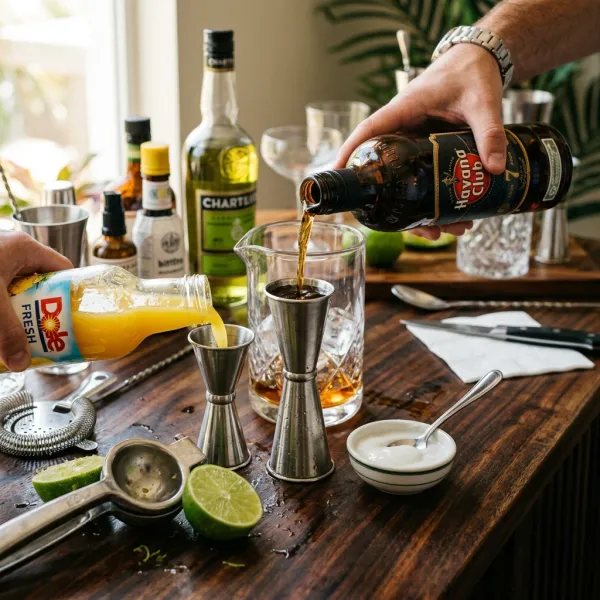
Add the unsweetened almond milk, Greek yogurt, vanilla whey protein isolate, creamy natural peanut butter, rolled oats, honey, and the tiny pinch of kosher salt directly to the bottom of your high-speed blender jar first. Blend on low speed for 10 seconds to grind the oats, hydrate the protein powder, and dissolve the salt. Pre-hydrating these elements first prevents raw grit.
-
Step 2
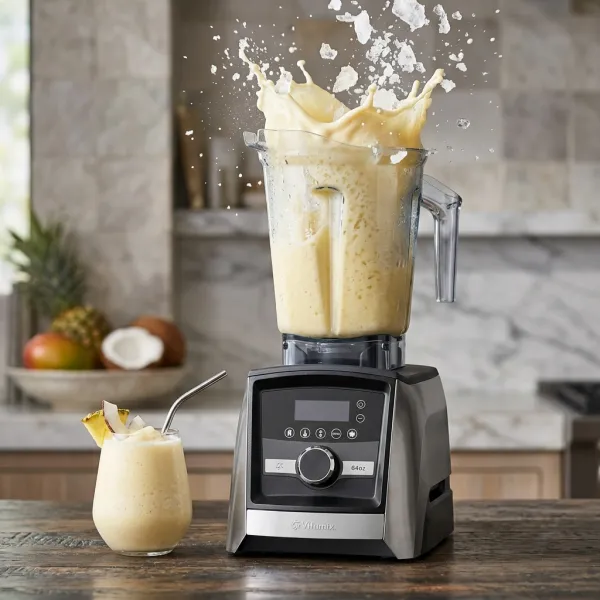
Add the sliced frozen banana and the ice cubes on top of the liquid base. Layering the heavy frozen ingredients last pulls them down cleanly into the blades, optimizing the shear vortex. Secure the lid tightly.
-
Step 3
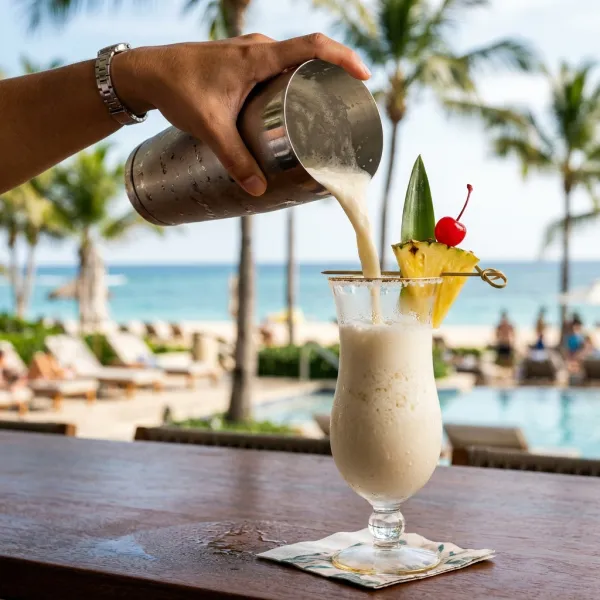
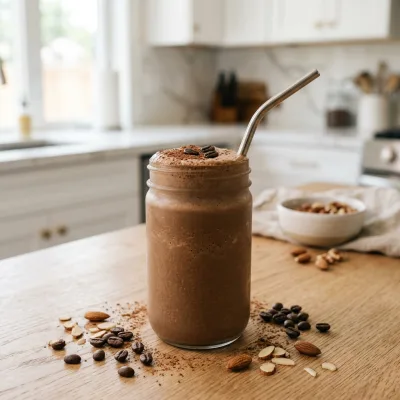
Start blending on low speed for 10 seconds to crush the ice, then immediately increase to maximum high speed. Blend for 45 to 60 seconds until a thick, glossy, perfectly smooth shake forms. Pour immediately into a chilled tall glass, garnish with a light sprinkle of crushed peanuts and a few chia seeds if desired, and enjoy immediately with a straw!
This is hands down the absolute smoothest and most delicious protein smoothie I have ever had! I have been drinking protein shakes for years and always hated that chalky, artificial taste and watery separation. Following your scientific instructions—especially adding the tiny pinch of salt and blending the oats and yogurt base first—is an absolute game-changer! The texture came out so incredibly thick, uniform, and velvety, exactly like a premium milkshake. The peanut butter and banana flavor is incredibly rich, and there was zero gritty taste. Truly a high-performance masterpiece!