

Recipe Science and Culinary Logs
🧪 The Science of Caffeine-Protein Binding, Viscoelastic Foam Stabilization, and Tannin Complexation
A flawless coffee protein smoothie must offer more than just a quick dose of energy; it must be a velvety, stable emulsion that delivers sustained alertness and a balanced, delicious flavor. Achieving this high-performance profile requires precise understanding of molecular protein-binding kinetics, emulsification mechanics, and polyphenol sensory competition:
- Caffeine-Protein Binding Kinetics: When high-quality whey protein isolate or plant protein is blended with brewed coffee, the proteins (primarily beta-lactoglobulin and alpha-lactalbumin in whey) form hydrophobic and electrostatic complexes with caffeine molecules. This hydrophobic encapsulation acts as a kinetic buffer in the gastrointestinal tract, slowing down the absorption rate of caffeine in the small intestine. This provides a sustained-release effect that prolongs mental alertness and focus while entirely mitigating the sharp adenosine-receptor spikes and subsequent jitters and crashes common with pure water-based caffeine solutions.
- Viscoelastic Foam Stabilization via Whey Surfactants: Whey proteins are highly amphiphilic molecules (containing both hydrophobic and hydrophilic amino acid residues). During high-speed blending, these proteins unfold at the air-water interface, forming a highly cohesive viscoelastic film that traps microscopic air bubbles to create a light, creamy shake structure. However, this foam is prone to drainage. Soluble starches and long-chain soluble **pectins** from the frozen banana slice increase the continuous-phase viscosity of the liquid, slowing down gravitational drainage (liquid draining from bubble walls) and completely preventing disproportionation (Ostwald ripening, where small bubbles merge into large ones), locking the foam in a luxurious, stable suspension.
- Tannin-Protein Complexation & Astringency Masking: Brewed coffee contains bitter chlorogenic acids and polyphenolic tannins that cause astringency by binding to and precipitating salivary proline-rich proteins in the mouth, creating a dry oral sensation. The proteins added during blending competitively bind to these polyphenols *in vitro*, preventing them from interacting with oral salivary proteins. This complexation completely neutralizes dry astringency and harsh bitter notes, revealing the coffee's underlying rich, chocolatey mocha-java flavors.
- Lipid-Coffee Emulsion & Aromatics Preservation: Coffee's volatile organic compounds (furans, pyrazines, and pyrroles) evaporate rapidly in warm environments. Blending chilled coffee with healthy lipids (from creamy almond butter and Greek yogurt) creates a stable micro-emulsion that traps these hydrophobic aromatic molecules within the liquid. This slows down their volatilization, creating an intense, long-lasting taste experience that lingers beautifully on the palate.
📝 From the Test Kitchen: Our Testing Trials
Our trials focused on avoiding protein curdling and optimizing the foam stability of the blend:
- Trial 1 (The Bitter Curdled Mess): We blended freshly brewed hot espresso directly with vanilla whey protein, dairy milk, and ice. Result: The high thermal energy of the coffee ($\sim$80°C) instantly denatured and coagulated the delicate whey protein, causing it to separate into gritty, chalky white curds. The heat also volatilized all the coffee aromatics, leaving a metallic, sour-tasting slurry that separated into clear water and gritty foam within 2 minutes.
- Trial 2 (The Foamy Air Explosion): We used chilled coffee and whey protein but omitted thickeners like banana or chia seeds, blending on high speed. Result: The protein-heavy base whipped into an excessively airy, voluminous foam that filled the blender. The texture was dry and airy (like eating bubbles), and the liquid rapidly drained to the bottom of the glass, leaving a dry, stiff head of foam on top.
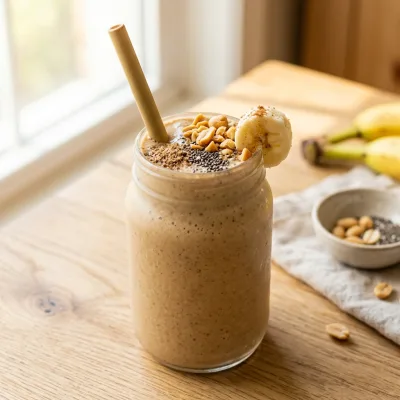
- Trial 3 (The Velvety High-Performance Shake): We chilled our strong brewed coffee to 4°C before starting. We placed the chilled coffee, almond milk, Greek yogurt, almond butter, honey, cocoa powder, ground chia seeds, and protein powder in the blender jar first. We blended on low for 10 seconds to fully hydrate the protein and emulsify the lipids, then added the frozen banana slices and ice. We blended on high for 45 seconds. Result: An absolutely spectacular, rich, glossy, and velvety mocha-java shake with the thickness of a premium diner milkshake. The foam stayed perfectly integrated for over 30 minutes, there was zero separation, and the coffee flavor was incredibly smooth, deep, and devoid of harsh bitterness or astringency!
🍳 Test Kitchen Equipment Checklist
- High-Speed Blender (1000+ Watts): Essential to apply the extreme shear forces necessary to unfold whey proteins and pulverize frozen bananas into a sub-100-micron velvet emulsion.
- Chilled Serving Glass: Keeping your serving glass in the freezer for 10 minutes before pouring preserves the cold temperature, keeping the protein-stabilized foam rigid, velvety, and fresh.
⚠️ Smoothie Pitfalls & Breakfast Playbook
Never Blend Hot Coffee: Always let your freshly brewed coffee cool to room temperature, or pre-chill it in the refrigerator before blending. Hot liquids instantly denature and coagulate protein powders, turning your smooth shake into a gritty, curdled mess.
Buffer with Lipids and Starches: Always include a lipid buffer (like almond butter or Greek yogurt) and a soluble starch source (like frozen banana slices). These ingredients are essential to lock in volatile coffee aromatics and coat taste receptors, creating a smooth flavor and a sustained-release energy profile.
Our Step-By-Step Cooking Guide
Follow these meticulously documented, kitchen-tested instructions to secure perfect results on your first attempt:
-
Step 1
Add the chilled brewed coffee, unsweetened almond milk, Greek yogurt, creamy almond butter, honey, cocoa powder, ground chia seeds, and vanilla whey protein isolate directly to the bottom of a high-speed blender jar first. Blend on low speed for 10 seconds to fully hydrate the protein powder and mix the liquid base. Hydrating the proteins first ensures a velvety emulsion without dry clumps.
-
Step 2
Add the sliced frozen banana and the ice cubes on top of the liquid base. Layering the heavy frozen ingredients last pulls them down cleanly into the blades, optimizing the shear blend. Secure the lid tightly.
-
Step 3
Blend on low speed for 10 seconds to crush the ice, then increase to maximum high speed. Blend for 45 to 60 seconds until a thick, glossy, mocha-colored shake forms with a rich, uniform consistency. Pour immediately into a chilled tall glass, garnish with a light dusting of cocoa powder and a few espresso beans if desired, and enjoy immediately with a straw!
As a certified coffee lover and gym enthusiast, this is the holy grail of protein shakes! I have tried so many coffee smoothies that turned out gritty or tasted like watered-down instant coffee, but the science behind this is absolutely spot-on. Chilling the coffee and adding the almond butter lipids completely eliminated all bitter astringency, leaving a rich, velvety mocha flavor that rivals a high-end coffeehouse frappe. And the sustained energy is real—no jitters or midday crash at all! Absolutely perfect!