

Recipe Science and Culinary Logs
🧪 Effervescence Physics & Density Gradients
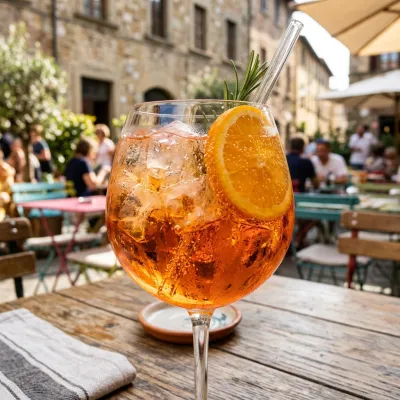
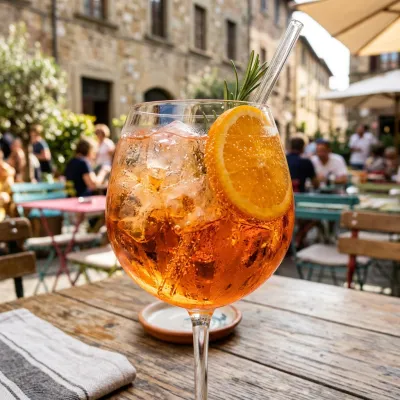
Constructing a perfect Aperol Spritz is a masterclass in mixology physics: fluid density gradients and effervescence conservation. Aperol liqueur has a very high sugar density (approx. 24g of sugar per fluid ounce), making it significantly heavier than Prosecco and club soda. If you build the drink by pouring Aperol first, the heavy liqueur pools at the bottom of the glass. Aggressively stirring the drink to mix it triggers nucleation points, releasing massive amounts of dissolved carbon dioxide ($CO_2$) and turning the spritz flat. By pouring the dry, chilled Prosecco *first*, followed by the dense Aperol, the Aperol naturally cascades downwards, self-mixing the drink evenly with zero carbonation loss! Finally, a quick splash of chilled sparkling mineral water completes the density cycle.
📝 From the Test Kitchen: Our Testing Logs
To eliminate flat or watery drinks, we ran multiple mixology trials:
- Trial 1 (The Flat Split): We poured Aperol first, added Prosecco, and stirred vigorously with a bar spoon. Result: The Prosecco lost its fizz immediately, producing a flat, overly sweet cocktail.
- Trial 2 (Watery Melt): We used crushed ice and warm ingredients. Result: The ice melted within 2 minutes, diluting the alcohol and botanicals, leaving a tasteless, watery orange slush.
- Trial 3 (Flawless Self-Mixed Fizz): We packed a large wine glass with 4 solid clear ice cubes, poured 3 oz of chilled dry Prosecco first, added 2 oz of Aperol second in a circular motion to let it cascade, and finished with a 1 oz splash of chilled club soda. We garnished with a fresh orange slice and a green olive. Result: An incredibly bubbly, sparkling, vibrant cocktail that remained effervescent and perfectly balanced for over 25 minutes!
🍳 Kitchen Equipment Checklist
- Large Balloon Wine Glass: Stemmed glassware allows the spritz to remain chilled without body heat from your hand warming the bowl.
- Stainless Steel Jigger: For precise cocktail measurements (accuracy is key to maintaining the authentic 3:2:1 spritz ratio).
- Bamboo Skewer: To elegantly skewer the traditional green olive.
⚠️ Mixology Pitfalls & Serving Playbook
Aperol vs. Campari: While both are bitter orange Italian aperitifs, Campari is much more bitter, higher in alcohol (25% ABV vs Aperol's 11%), and has a darker crimson hue. Use Campari if you prefer a drier, highly bitter punch, but stick to Aperol for the classic, approachable sweet-citrus spritz.
The Salted Edge Garnish: Always add a skewered green olive. The olive's salinity provides a high-contrast balance against the sweet, herbaceous orange botanicals of the Aperol, creating a spectacular multi-dimensional flavor profile that sets this apart from basic recipes!
Our Step-By-Step Cooking Guide
Follow these meticulously documented, kitchen-tested instructions to secure perfect results on your first attempt:
-
Step 1
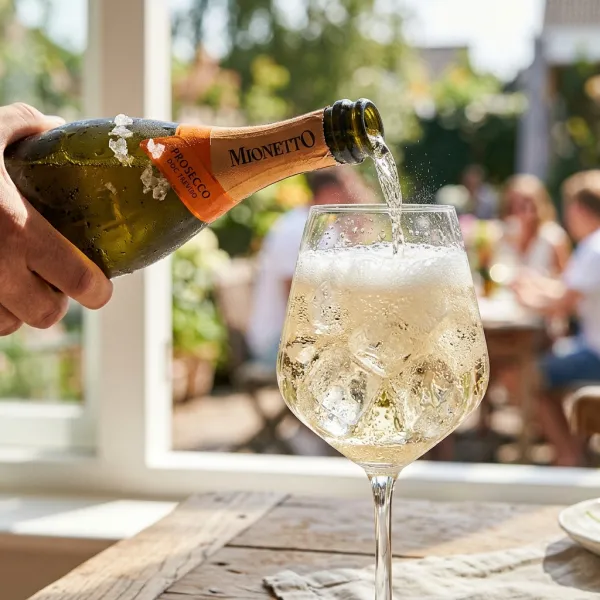
Select a large balloon wine glass and pack it completely to the brim with 3 to 4 large, solid, clear ice cubes to ensure minimal surface melting. Slowly pour in the 3 oz of chilled dry Prosecco first. Pouring the Prosecco first ensures a bubbly baseline and prevents the liqueur from collecting at the bottom.
-
Step 2
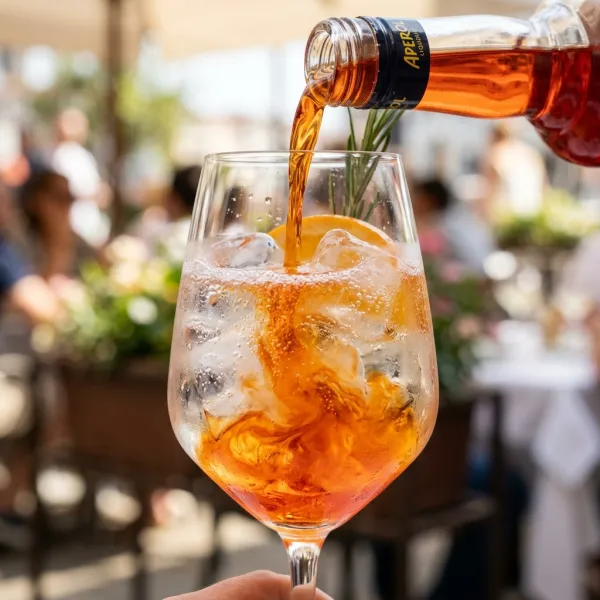
Measure and pour the 2 oz of bright orange Aperol liqueur into the wine glass. Pour slowly in a circular motion directly over the Prosecco. Because Aperol is significantly denser and heavier, it will naturally filter downwards through the wine, creating beautiful orange swirls and self-mixing without needing a spoon.
-
Step 3
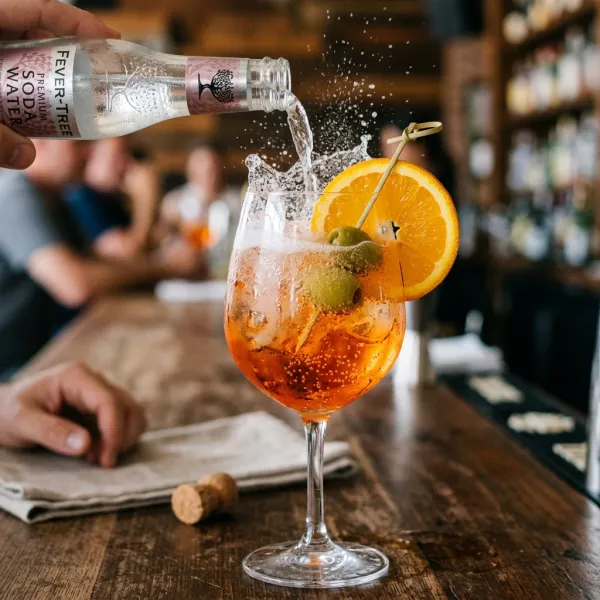
Splash in 1 oz of chilled club soda to loosen the density and add an effervescent, mineral-rich lift. Garnish the spritz immediately by placing a fresh orange wheel in the glass to release citrus aromatics, and add a skewered green olive Castelvetrano to provide the perfect briny, high-contrast salinity balance. Serve immediately while ice-cold and bubbly.
Bravissimo! I am from Venice and this is the first time I have seen a recipe teach the Prosecco-first cascade build correctly. And adding the green olive skewered on top is the absolute true Venetian signature. Simply brilliant!