

Recipe Science and Culinary Logs
🧪 Custard Emulsion & Sponge Physics
Creating the ultimate French toast is a masterclass in food physics: custard coagulation and starch hydration. To secure a rich, creamy interior that sets without tasting like scrambled eggs, you must adhere to the **golden ratio of 1 large egg to 1/4 cup (60 ml) of dairy**. Using a blend of heavy cream and whole milk elevates the butterfat content, which coats the starches and blocks gluten formation, producing a velvety texture. Crucially, the bread must be **stale and thick-sliced (3/4-inch)**. Fresh bread contains high moisture levels and a weak crumb structure that collapses, while dry, day-old brioche acts like a thirsty sponge. It locks in the custard while maintaining its pillowy structural integrity during frying.
📝 From the Test Kitchen: Our Testing Logs
We refined this recipe through multiple testing trials to eliminate common soggy outcomes:
- Trial 1 (The Omelet Toast): We used 3 eggs to 1/2 cup of milk and cooked on medium-high heat. Result: The exterior scorched quickly while the interior remained a wet, raw batter with a heavy sulfurous, egg-heavy taste.
- Trial 2 (The Soggy Collapse): We used fresh brioche bread soaked for 1 minute in a milk-only custard. Result: The bread completely broke down, turned mushy, and tore in half when sliding the spatula underneath.
- Trial 3 (Brioche Perfection): We thick-sliced day-old brioche and let it dry on a wire rack. We dipped each slice for exactly 15 seconds per side in our heavy cream-custard, then fried them over medium-low heat in a mix of butter and oil. Result: An exceptionally crispy, golden-caramelized outer crust with a melting, pillowy custardy center.
🍳 Kitchen Equipment Checklist
- Heavy Cast-Iron Skillet: Retains and distributes heat evenly, guaranteeing that perfect, consistent golden caramelization across the entire surface.
- Shallow Wide Dish: A pie dish or shallow wide ceramic container is ideal for soaking bread slices flat without folding.
- Wire Whisk: Essential to thoroughly emulsify the heavy cream and eggs into a uniform custard, preventing any stringy egg-white pieces.
- Flat Metal Spatula: Allows you to slide effortlessly under the delicate soaked bread slices to flip them without tearing.
⚠️ Troubleshooting & Playbook
Never Use Margarine: Frying in real unsalted butter combined with a tiny splash of neutral oil (like canola) is vital. The oil raises the butter's smoke point, preventing the milk solids from burning.
Keep Them Warm: If cooking in batches, never stack hot French toast on a plate—this creates steam, turning the crispy crust soggy! Instead, arrange them in a single layer on a wire rack set inside a sheet pan and keep them warm in a 200°F (93°C) oven.
Our Step-By-Step Cooking Guide
Follow these meticulously documented, kitchen-tested instructions to secure perfect results on your first attempt:
-
Step 1
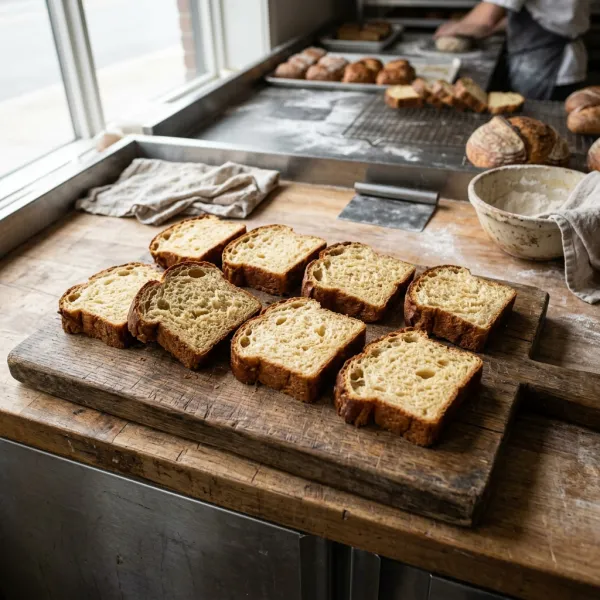
Slice the brioche bread into thick 3/4-inch slices and lay them out on a wire rack for 3 to 4 hours (or overnight) to stale and dry. Alternatively, dry them in a 200°F (93°C) oven for 15 minutes.
-
Step 2
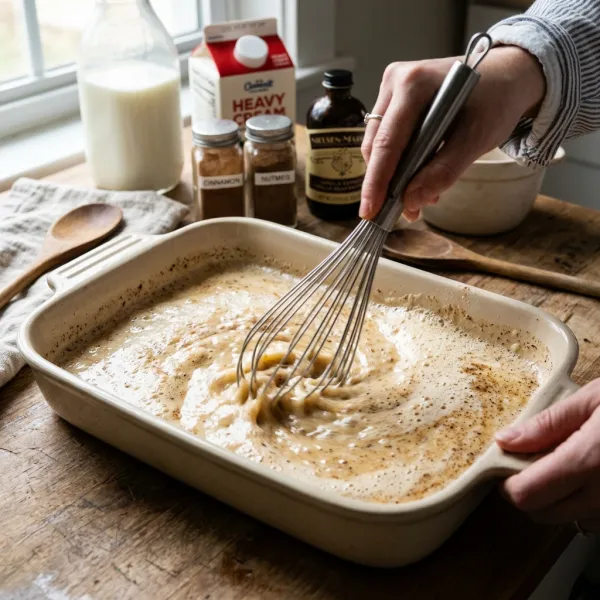
Whisk together the eggs, whole milk, heavy cream, granulated sugar, vanilla extract, ground cinnamon, nutmeg, and salt in a shallow dish until completely emulsified with no stringy egg whites.
-
Step 3
Preheat a heavy skillet over medium-low heat and melt 1 tablespoon of butter with a splash of oil. Soak each bread slice flat in the custard for 15 seconds per side, transfer to the skillet, and fry for 3 to 4 minutes per side until beautifully golden-brown and caramelized. Serve immediately with warm maple syrup.


Stunning French toast! The 1:4 custard ratio is pure genius. The interior was incredibly custardy without being soggy at all.