

Recipe Science and Culinary Logs
🧪 The Science of Starch Hydration and Antioxidant Preservation
A flawless breakfast smoothie should be filling, rich, and velvety smooth, without any chalky texture or fast separation. The culinary science behind incorporating dry oats into a cold blend relies on starch mechanics and emulsification:
- Pulverization vs. Grittiness: Rolled oats contain tough **insoluble cellulose fibers** and raw starch granules. If blended directly with liquids, they remain in large sandy pieces that settle at the bottom, creating a chalky throat feel. Pulverizing the dry oats first breaks them into a microscopic powder. This enables them to hydrate evenly in a cold emulsion, mimicking the texture of cooked oats.
- Beta-Glucan Gelatinization: Oats are packed with **beta-glucan**, a highly soluble dietary fiber. When exposed to liquid, beta-glucan molecules absorb water like a sponge and swell. Letting the smoothie rest for exactly 2 minutes after blending allows these fibers to form a light, creamy gel network that suspends the fruit particles, creating a thick, luxurious "milkshake" body.
- Banana Starch Emulsification: Ripe bananas are loaded with starch and natural **pectin**. Pectin act as a powerful plant-based emulsifier that binds the lipids in Greek yogurt with the water-based milk, preventing the blended drink from separating.
- Anthocyanin Antioxidant Synergy: Blueberries owe their deep indigo color to **anthocyanins**, extremely potent antioxidants. These molecules are highly stable in acidic environments. The moderate acidity in Greek yogurt and fresh fruit preserves these pigments, keeping the smoothie a vibrant purple rather than a dull grey-brown.
📝 From the Test Kitchen: Our Testing Trials
We tested multiple oat hydration methods to solve the raw oat grit dilemma:
- Trial 1 (The Chalky settled Mess): We added whole rolled oats directly with frozen berries, yogurt, and milk, blending them all together. Result: The smoothie had a highly textured, sandy throat feel. Within three minutes, a heavy layer of raw oatmeal settled at the bottom of the glass, making the remaining drink thin and watery.
- Trial 2 (The Slimy Glue): We cooked quick-cooking oats in hot water first, let them cool, and then blended them into the cold smoothie. Result: The excessive heat-activated beta-glucan gelatinization made the smoothie unpleasantly slimy, heavy, and glue-like. It lacked fresh breakfast appeal.
- Trial 3 (Micro-Pulverized Viscous Perfection): We blended raw rolled oats in a dry blender first until they formed a powder. We added milk, yogurt, ripe banana, and maple syrup, blending to a smooth base, and then threw in the frozen wild blueberries. We let the finished blend rest for 2 minutes before pouring. Result: An exceptionally rich, velvety, deep purple smoothie that tasted incredibly creamy, had zero chalky grittiness, and stayed integrated for hours!
🍳 Test Kitchen Equipment Checklist
- High-Speed Blender (1200+ Watts): Essential to pulverize the rolled oats into a true, flour-like dust in seconds.
- Dry Blender Jar: The blender jar must be completely dry when pulverizing the oats; any moisture will cause the oat flour to clump and stick to the bottom.
- Silicone Spatula: To ensure all the thick, velvety smoothie is scraped cleanly from the blender walls.
⚠️ Oatmeal Smoothie Pitfalls & Breakfast Playbook
The Dry-Jar Rule: Always pulverize your rolled oats first, by themselves, in a completely dry jar. If you add liquids first, the oats will only chop coarsely and remain highly gritty. The dry grind is the absolute key to a smooth texture.
The Mandatory Rest: Do not skip the 2-minute rest! This gives the micro-pulverized oat fibers time to absorb the liquids, turning a slightly runny smoothie into a rich, full-bodied breakfast beverage that keeps you full until lunch.
Our Step-By-Step Cooking Guide
Follow these meticulously documented, kitchen-tested instructions to secure perfect results on your first attempt:
-
Step 1
Add the dry old-fashioned rolled oats directly to the jar of a high-speed blender. The blender jar must be completely dry. Blend on maximum high speed for 15 to 20 seconds until the oats are completely pulverized into a ultra-fine, powder-like oat flour. Grinding dry oats first is the absolute secret to a smooth texture, eliminating grittiness.
-
Step 2
Add the whole milk, Greek yogurt, ripe banana, pure maple syrup, vanilla extract, and ground flaxseeds (if using) directly into the blender jar on top of the oat flour. Blend on medium speed for 10 to 15 seconds until the ingredients integrate into a thick, uniform liquid base.
-
Step 3
Add the frozen wild blueberries. Secure the lid tightly and blend on low speed for 15 seconds to crush the frozen fruit, then increase to maximum high speed for 45 seconds until completely uniform, glossy, and a rich, deep purple color. Let the smoothie rest in the blender jar for exactly 2 minutes before serving to let the fibers fully hydrate and swell!
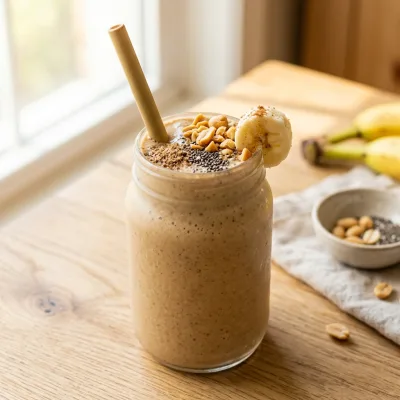
This is an absolute breakfast masterpiece! I have always hated green or oat smoothies because they felt so chalky and gritty, but grinding the dry rolled oats into a powder first completely solves the problem! The 2-minute resting trick made it incredibly thick, like a rich blueberry milkshake. Simply outstanding!