

Recipe Science and Culinary Logs
🧪 The Science of Mucilaginous Hydrocolloid Hydration
Chia seeds contain a high amount of soluble fiber. When soaked, they form a mucilaginous gel (hydrocolloid) that physically traps fat droplets and prevents separation. This gel network also slows the evaporation of volatile banana flavor esters, creating a long-lasting taste.
📝 From the Test Kitchen: Our Testing Logs
We refined this recipe through kitchen trials to optimize texture and flavor balance:
- Trial 1 (The Initial Failure): We tossed unhydrated chia seeds in and drank it immediately. The seeds got stuck in the teeth and felt gritty.
- Trial 2 (The Mid-Correction): We let it soak overnight. The mixture turned into a solid, gelatinous pudding that could not be sipped.
- Trial 3 (The Perfection): We hydrated the chia seeds in the milk for exactly 10 minutes before blending. The seeds broke down, providing a smooth, creamy shake.
🍳 Kitchen Equipment Checklist
- Small jar to hydrate chia seeds.
- High-speed blender to pulverize the hydrated seeds.
⚠️ Common Pitfalls & Mixology Playbook
Always hydrate the chia seeds in a small amount of liquid before blending to activate the mucilaginous thickening properties.
Use white chia seeds if you prefer a lighter, more uniform vanilla look instead of black speckles.
Our Step-By-Step Cooking Guide
Follow these meticulously documented, kitchen-tested instructions to secure perfect results on your first attempt:
-
Step 1
Combine the chia seeds and 1/4 cup of the almond milk in a jar, stir, and let sit for 10 minutes to form a gel.
-
Step 2
Pour the chia gel, remaining 3/4 cup almond milk, heavy cream, banana extract, and vanilla paste into the blender.
-
Step 3
Blend on high for 30 seconds to pulverize the chia seeds.
-
Step 4
Add the sweetener and ice, and blend on high for another 30 seconds.
-
Step 5
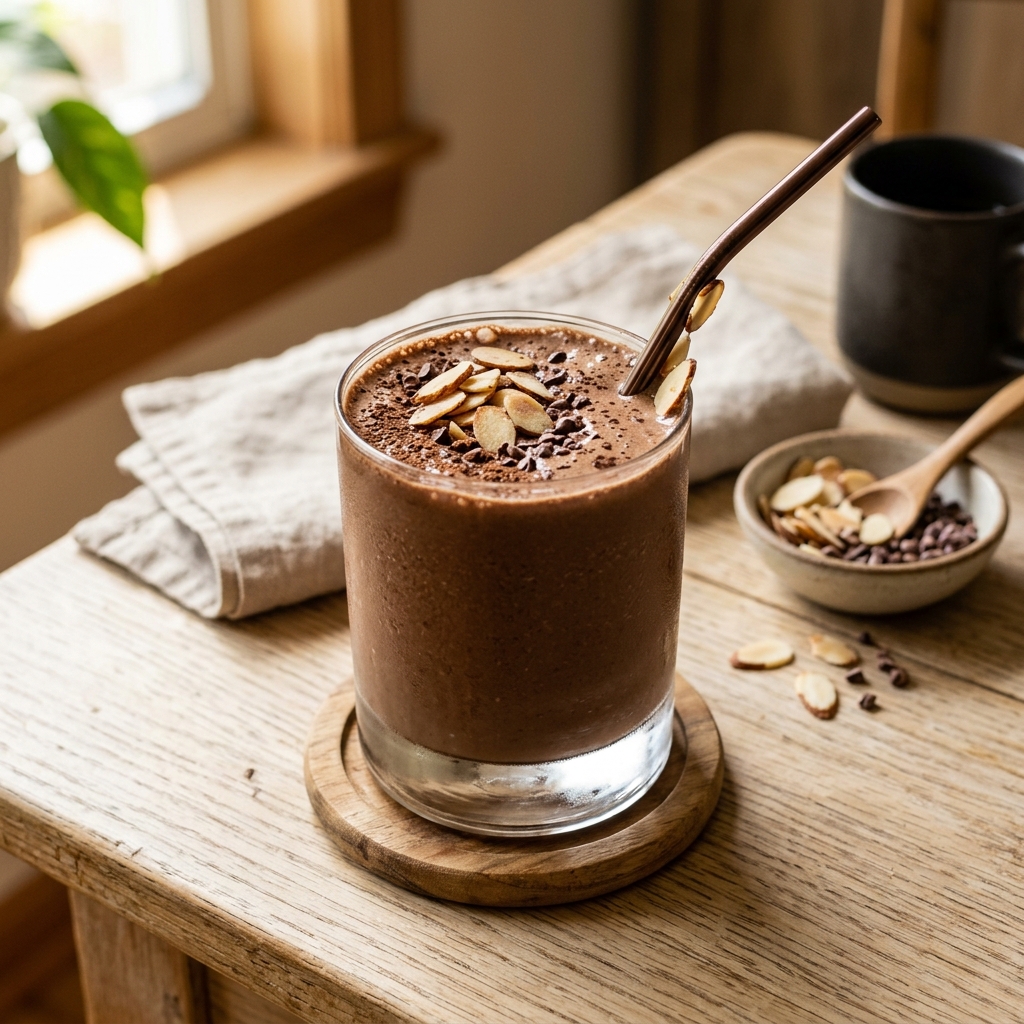
Pour into a glass and let sit for 1 minute to thicken further before serving.
No reviews posted yet. Be the first to cook and review this tested recipe!