

Recipe Science and Culinary Logs
🧪 The Science of Curcumin Bioavailability, Piperine, and Lipids
Turmeric is celebrated for **curcumin**, its primary anti-inflammatory bioactive compound. However, curcumin on its own has exceptionally low bioavailability—the body struggles to absorb it because it is hydrophobic (water-repelling) and rapidly metabolized by the liver. To unlock its therapeutic potential, this recipe pairs it with two key absorption enhancers. First, we blend it with **coconut milk lipids**. Curcumin dissolves in fat, allowing it to bypass direct liver filtration via the lymphatic system. Second, we add a tiny pinch of **black pepper**, which contains the alkaloid **piperine**. Piperine temporarily inhibits the liver enzymes that tag curcumin for excretion, boosting curcumin absorption by up to 2,000%. Fresh ginger provides **gingerols**, which work synergistically with curcumin to block inflammatory cytokine pathways, while the citric acid in orange juice helps break down the fibrous spice cell walls during blending.
📝 From the Test Kitchen: Our Testing Logs
Our kitchen trials focused on finding the right balance of heat, earthiness, and fiber removal:
- Trial 1 (The Muddy Fiber Drink): We blended unpeeled ginger and turmeric chunks with plain water and fruit. The results were gritty, fibrous, and had a raw, earthy flavor resembling damp soil.
- Trial 2 (The Pepper Burn): We added 1/4 teaspoon of black pepper to maximize absorption. The smoothie was aggressively spicy, causing throat burn and completely masking the sweet, tropical flavors of mango and pineapple.
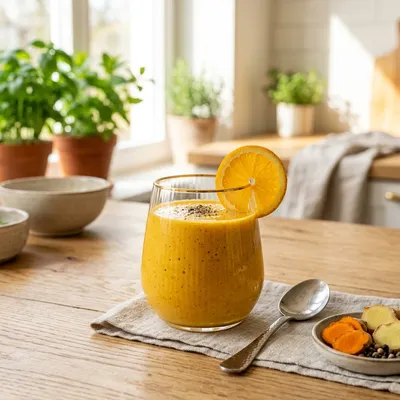
- Trial 3 (The Tropical Emulsified Glow): We peeled and grated the roots first. We blended them with fat-rich light coconut milk, orange juice, frozen mango, pineapple, and a single tiny pinch (less than 1/16 tsp) of fresh black pepper. Blended for 60 seconds on high, it turned into a silky, golden, tropical shake with a gentle, comforting spice warmth.
🍳 Kitchen Equipment Checklist
- High-Speed Blender: Crucial to break down the fibrous structures of ginger and turmeric into a silky liquid.
- Vegetable Peeler or Spoon: A spoon is the best tool to scrape the skin off ginger and turmeric roots without wasting the flesh.
- Microplane Zester: To finely grate the roots for uniform dispersion.
⚠️ Common Pitfalls & Mixology Playbook
Yellow Staining: Turmeric stains plastic blender jars, cutting boards, and skin easily. Wash all equipment immediately after use. If stained, leave the blender jar in direct sunlight for a few hours; UV light breaks down curcumin pigments.
Powder Swap: If fresh turmeric is unavailable, substitute with 1/2 teaspoon of organic turmeric powder, but ensure it is fresh and aromatic.
Our Step-By-Step Cooking Guide
Follow these meticulously documented, kitchen-tested instructions to secure perfect results on your first attempt:
-
Step 1
Use the edge of a spoon to scrape the thin skins off the ginger and turmeric roots. Finely grate 1 teaspoon of each using a microplane.
-
Step 2
To the blender jar, add the grated ginger, grated turmeric, light coconut milk, orange juice, honey (if using), and a single pinch of black pepper.
-
Step 3
Add the frozen mango and pineapple chunks on top of the liquid ingredients.
-
Step 4
Secure the lid tightly and blend on high speed for a full 60 seconds until the smoothie is completely creamy, bright golden-orange, and free of fibrous bits.
-
Step 5
Pour into a glass, garnish with an orange slice on the rim, and drink immediately to reap the inflammatory benefits.


No reviews posted yet. Be the first to cook and review this tested recipe!