

Recipe Science and Culinary Logs
🧪 The Science of Caffeine Synergy & Cocoa Emulsification
Combining coffee and cacao does more than create a delicious mocha flavor; it activates a powerful neurological synergy. Caffeine (from coffee) acts as a nervous system stimulant, while **theobromine** (the primary alkaloid in cacao) acts as a mild vasodilator, relaxing blood vessels and improving blood flow. This combo delivers alert, jitter-free energy without the sharp post-caffeine crash. However, raw cocoa powder is highly hydrophobic, meaning it repels water and clumps in cold liquids. To overcome this, we use **lipid emulsification**. By pre-blending the cocoa powder with almond butter (which contains natural fats and emulsifying lecithin) before introducing the liquid, we coat the dry cocoa particles in lipids. This allows them to disperse evenly throughout the liquid, yielding a perfectly smooth shake with no chalky residue. Additionally, a tiny pinch of **sodium chloride (salt)** selectively blocks the bitterness receptors (T2Rs) on the tongue, enhancing the perceived sweetness of the banana and chocolate without adding extra sugar.
📝 From the Test Kitchen: Our Testing Logs
We ran several trials to perfect the texture and avoid the bitter notes common to coffee shakes:
- Trial 1 (The Sandy Sediment): We tossed cocoa powder directly into cold coffee and milk. The hydrophobic powder floated on top and clumped, leaving a chalky texture and dark, bitter pockets in the glass.
- Trial 2 (The Acidic Brew): We used cooled-down hot-brewed espresso. The heat-activated chlorogenic acids from the hot brewing process created a sour, highly acidic profile that upset the stomach and felt overly harsh.
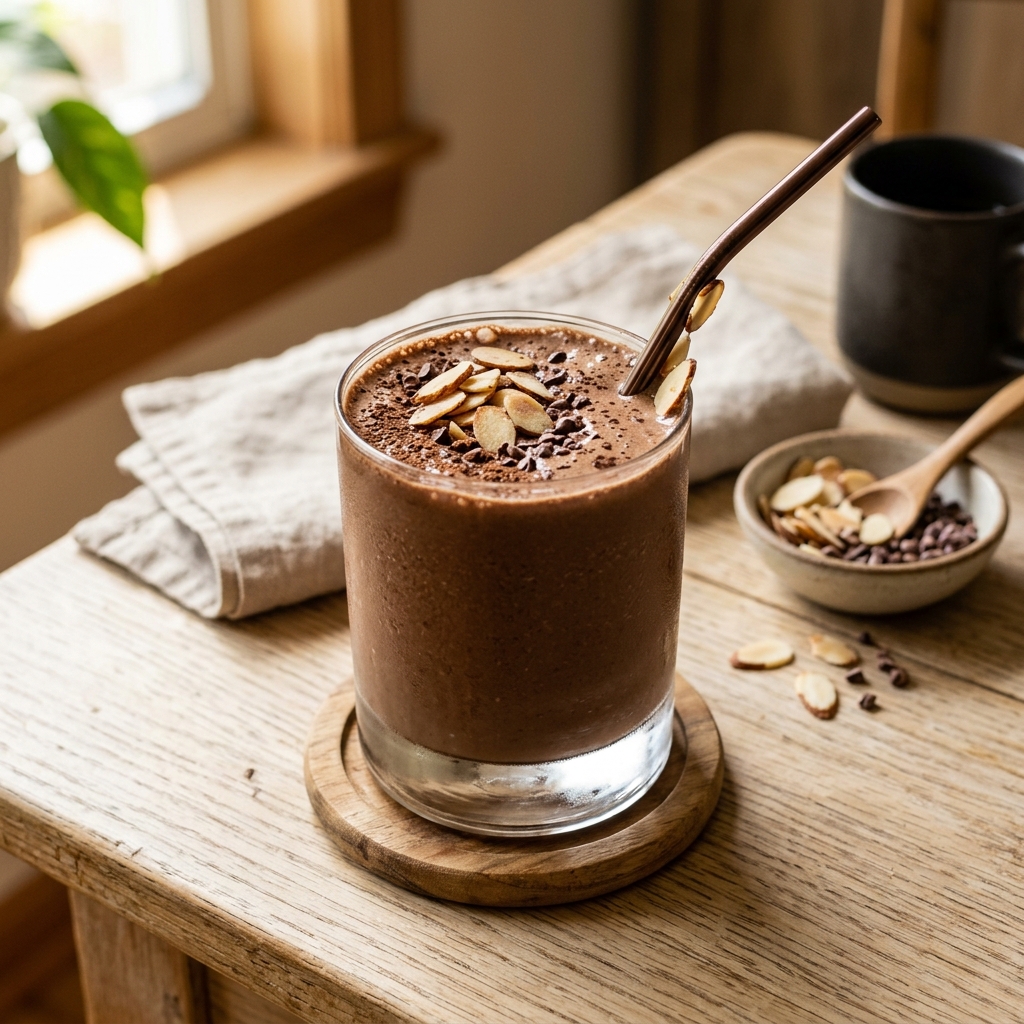
- Trial 3 (The Silky Mocha Masterpiece): We switched to cold brew concentrate (which has a 60% lower acid profile than hot coffee). We also pre-blended the cocoa powder, almond butter, and honey into a smooth chocolate paste first. Finally, we added the frozen banana and oat milk, blending on high for 45 seconds. The result was a velvety, rich, smooth shake with a balanced mocha flavor.
🍳 Kitchen Equipment Checklist
- High-Speed Blender: Critical to break down the frozen banana and emulsify the almond butter and cocoa powder.
- Measuring Spoons: Essential for precise cocoa powder and almond butter ratios to maintain the delicate chocolate-to-coffee balance.
⚠️ Common Pitfalls & Mixology Playbook
Avoid Chalkiness: Never dump cocoa powder on top of the liquid after blending. Always blend the cocoa directly with the almond butter and sweetener first to coat the starch granules in fat.
Espresso Twist: If you don't have cold brew, dissolve 1 teaspoon of instant espresso powder in 1 tablespoon of hot water, let it cool completely, and use it as a replacement for the cold brew concentrate.
Our Step-By-Step Cooking Guide
Follow these meticulously documented, kitchen-tested instructions to secure perfect results on your first attempt:
-
Step 1
In a high-speed blender jar, add the creamy almond butter, Dutch-processed cocoa powder, honey, vanilla extract, pinch of sea salt, and a splash (about 2 tablespoons) of the oat milk.
-
Step 2
Blend on low speed for 10-15 seconds to emulsify the cocoa powder and almond butter into a smooth, glossy chocolate paste.
-
Step 3
Add the chilled cold brew coffee concentrate, frozen banana slices, and the remaining oat milk to the blender.
-
Step 4
Secure the lid and blend on high speed for 40-45 seconds until the frozen banana is fully pulverized, creating a thick, velvety mocha shake.
-
Step 5
Pour into a chilled glass, garnish with a light dusting of cocoa powder or a few cacao nibs, and serve immediately.

No reviews posted yet. Be the first to cook and review this tested recipe!