

Recipe Science and Culinary Logs
🧪 Medium-Chain Triglycerides & Low-Carb Emulsion
Traditional smoothies rely on starch-rich fruits like bananas or oats to create a thick, stable emulsion. In a ketogenic diet, these high-carbohydrate binders are prohibited. To achieve a rich, velvety texture, we must rely on **lipid emulsification** and **protein stabilization**:
- Almond Lipids & Proteins: Almond butter contains natural monounsaturated fats and proteins. When blended at high shear, the almond proteins align at the oil-water interface, wrapping around fat droplets and suspending them uniformly in the liquid coconut milk.
- MCT Kinetics (Coconut Fats): Unsweetened coconut milk is rich in **Medium-Chain Triglycerides (MCTs)**, primarily lauric, capric, and caprylic acids. Unlike long-chain fatty acids, MCTs bypass the lymphatic system during digestion and are transported directly to the liver via the portal vein. Here, they are rapidly converted into **ketones**, providing an immediate energy boost without triggering insulin release.
- Flavor Masking (Stevia & Cinnamon): Non-nutritive sweeteners (like stevia or erythritol) often trigger bitter or metallic off-notes on the tongue. Adding a small pinch of **ground cinnamon** and a pinch of salt blocks these bitter receptors, rounding out the chocolate profile and leaving a pleasant, sweet almond-fudge finish.
📝 From the Test Kitchen: Our Testing Logs
We tested various dairy-free milks and sweetener ratios to create a satisfying shake:
- Trial 1 (The Chalky Fail): We used unsweetened carton almond milk, chocolate protein powder, and cocoa with water and ice. Result: Without a dense fat source, the shake was thin, separated instantly, and tasted incredibly dry and chalky on the palate.
- Trial 2 (The Heavy Whipped Butter): We used full-fat canned coconut cream directly without dilution. Result: The shake was so thick it was spoon-only, and it felt greasy, coating the mouth in a heavy, cold film of coconut fat that masked the chocolate flavor.
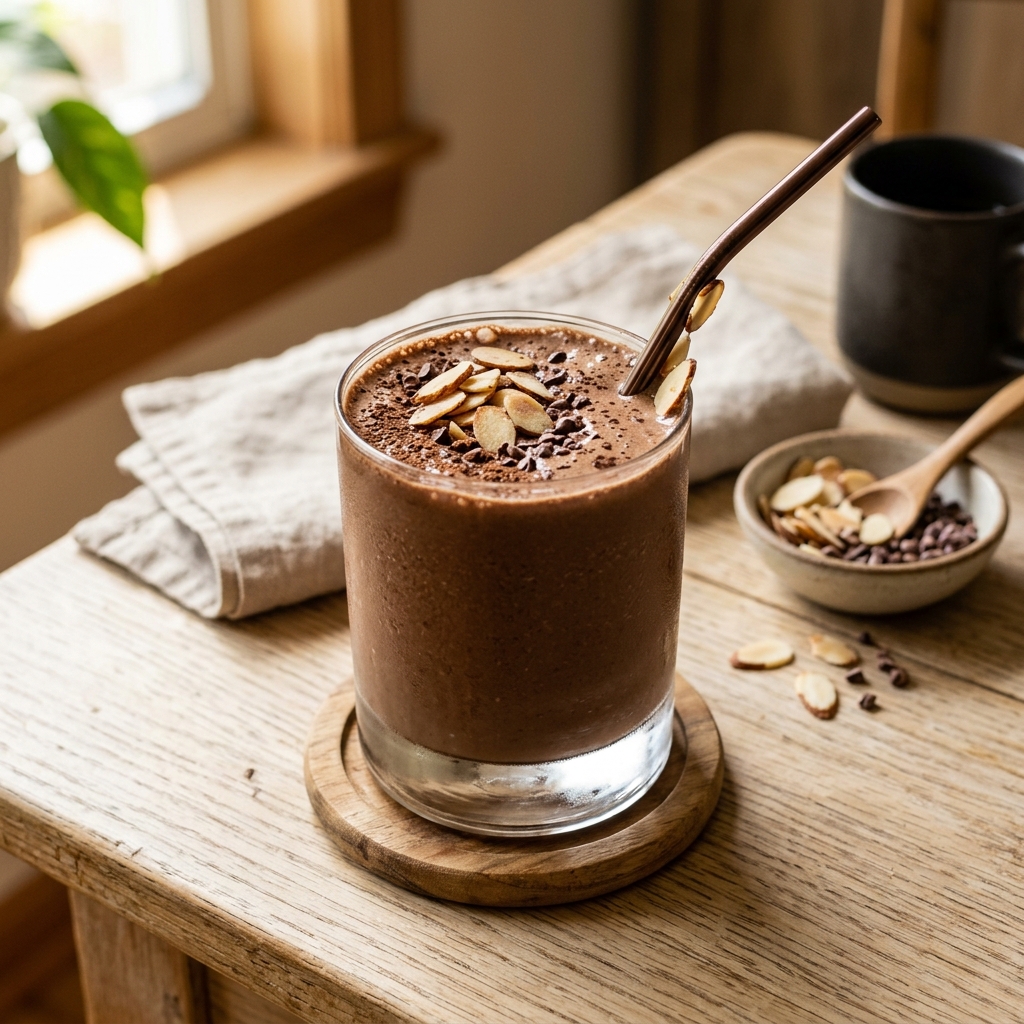
- Trial 3 (The Fudge Masterpiece): We blended unsweetened coconut milk (carton format), 2 tablespoons of natural almond butter, 1.5 tablespoons of cocoa, a scoop of vanilla whey isolate, a pinch of cinnamon, a pinch of salt, and ice. Result: An exceptionally creamy, smooth chocolate-almond fudge shake. No greasy feel, no chalkiness—just pure chocolate-nut satisfaction.
🍳 Kitchen Equipment Checklist
- High-Speed Blender: Needed to fully emulsify the thick almond butter into the coconut milk.
- Rubber Spatula: To scrape the sticky almond butter out of measuring spoons.
- Measuring Spoons: For exact measurement of cocoa and nut butter.
⚠️ Common Pitfalls & Playbook
Avoiding the Chalky Texture: Cocoa powder and protein powder are dry, hydrophobic solids. To prevent them from tasting chalky in the finished drink, always blend the liquid, nut butter, and powders together first on medium speed *before* adding the ice. Hydrating the powders first is key.
Masking Sweetener Aftertaste: If you use stevia or monk fruit, it can leave a bitter or cooling aftertaste. A small pinch of cinnamon and a tiny pinch of salt are natural flavor enhancers that mask these off-notes, making the chocolate taste richer and deeper.
Our Step-By-Step Cooking Guide
Follow these meticulously documented, kitchen-tested instructions to secure perfect results on your first attempt:
-
Step 1
Pour the cold coconut milk into the blender jar first. Add the almond butter, cocoa powder, chocolate protein powder, cinnamon, and a tiny pinch of salt.
-
Step 2
Blend on medium speed for 10-15 seconds to hydrate the powders and fully dissolve the almond butter into the liquid base.
-
Step 3
Add the ice cubes to the blender.
-
Step 4
Blend on high speed for 40-45 seconds until thick, frosty, creamy, and completely smooth.
-
Step 5
Pour into a glass and garnish with sliced almonds and a light dust of cocoa powder. Serve immediately.
No reviews posted yet. Be the first to cook and review this tested recipe!