

Recipe Science and Culinary Logs
🧪 The Science of High-Fat Emulsions
Creating a silky, thick shake using solid peanut butter and high-fat liquids (like heavy cream or full-fat canned coconut milk) can be tricky. When solid fats are blended directly with cold liquids, they tend to drop in temperature rapidly, cause the lipids to crystalize, and result in a gritty or separated texture. To prevent this, we utilize room-temperature emulsion. By blending the natural peanut butter, cocoa powder, and room-temperature coconut milk first, we allow the natural emulsifiers in peanut butter (mainly lecithin and diglycerides) to bind the fats and water molecules into a smooth, shiny paste (the emulsion base). Only after this paste is fully uniform do we add the cold ice cubes and blend on high speed. This locks the structure in place, producing a frosty, mousse-like consistency that never separates.
📝 From the Test Kitchen: Our Testing Logs
Here is how we perfected this fat bomb shake during testing trials:
- Trial 1 (The Seized Specks): We poured ice-cold almond milk, peanut butter, and cocoa directly into the blender. The cold temperature caused the peanut butter fats to seize, creating waxy specks that floated at the top, while the cocoa powder stayed dry and chalky.
- Trial 2 (The Heavy Film): We tried using heavy whipping cream as the sole liquid base. It whipped into a dense, butter-like paste in the blender, coating the mouth in an unpleasantly greasy, heavy layer.
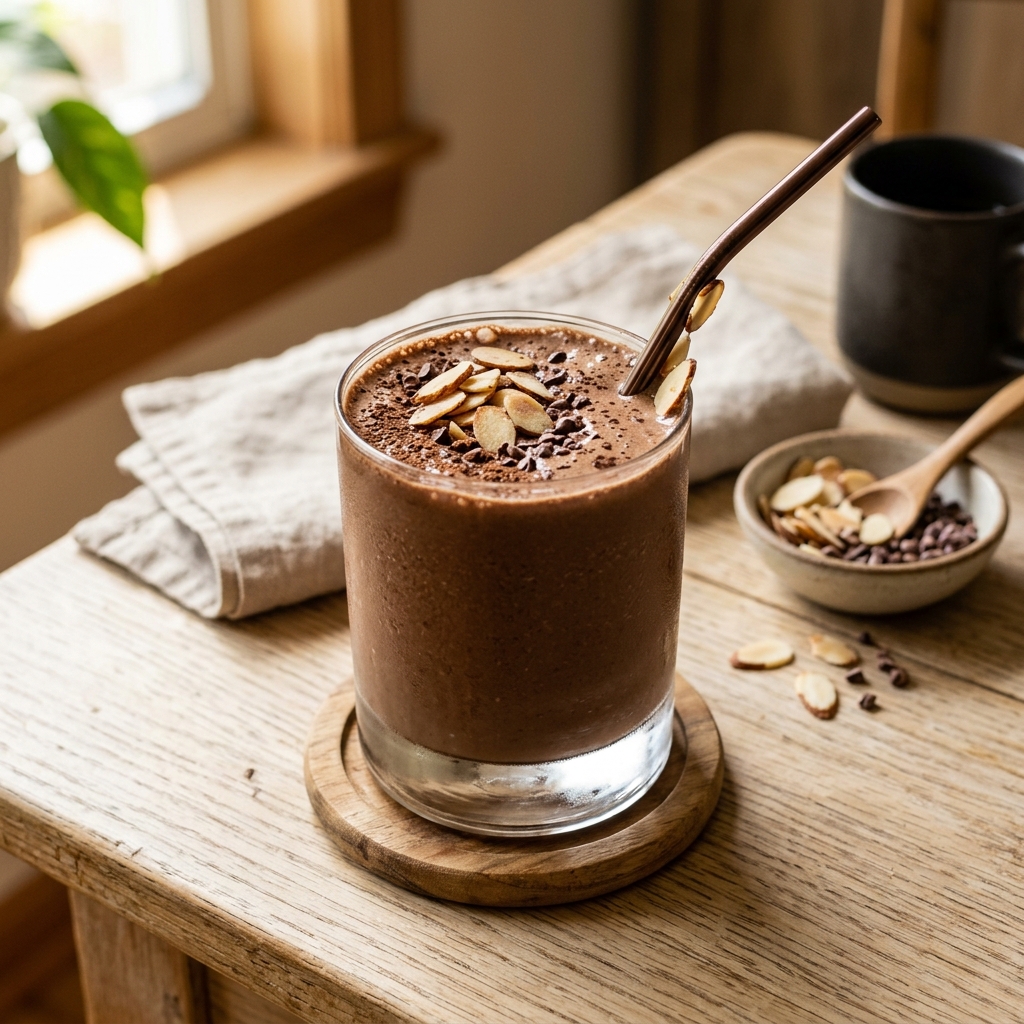
- Trial 3 (Glossy perfection): We used a hybrid liquid base of full-fat canned coconut milk and a splash of unsweetened almond milk. We blended the peanut butter, cocoa, liquid sweetener, and base liquids at room temperature first to create a glossy syrup, then added ice and blended on high. The result was an exceptionally creamy, rich shake resembling a premium chocolate frosty, without any greasy residue.
🍳 Kitchen Equipment Checklist
- High-Speed Blender: Necessary to completely break down the cocoa powder and seamlessly integrate the heavy peanut butter lipids.
- Silicone Spatula: To scrape down the sides of the blender jar to ensure all cocoa powder is captured in the blend.
⚠️ Common Pitfalls & Mixology Playbook
Natural vs. Commercial Peanut Butter: Always use 100% natural creamy peanut butter (just peanuts and salt). Commercial peanut butters contain hydrogenated palm oils, which prevent a clean emulsion and leave a waxy coating in the mouth.
Sweetener Chemistry: If you are strictly keto/low-carb, use liquid stevia, monk fruit, or erythritol. Liquid sweeteners are preferred over granulated sweeteners because granules do not dissolve easily in cold emulsions and will leave a gritty residue at the bottom of the glass.
Our Step-By-Step Cooking Guide
Follow these meticulously documented, kitchen-tested instructions to secure perfect results on your first attempt:
-
Step 1
In a blender jar, combine the room-temperature full-fat coconut milk, unsweetened almond milk, natural creamy peanut butter, cocoa powder, liquid stevia, and a pinch of sea salt.
-
Step 2
Blend on medium-low speed for 20-30 seconds. Stop and scrape down the sides with a spatula to incorporate all cocoa powder, then blend for another 10 seconds until a glossy, smooth chocolate syrup forms.
-
Step 3
Add the ice cubes to the chocolate-peanut butter syrup base.
-
Step 4
Secure the lid and blend on high speed for 30-40 seconds until the ice is completely pulverized and the shake is frosty, thick, and mousse-like.
-
Step 5
Pour into a serving glass, dust with a tiny bit of extra cocoa powder or crushed peanuts, and enjoy immediately.
No reviews posted yet. Be the first to cook and review this tested recipe!