

Recipe Science and Culinary Logs
🧪 Adenosine Blocking & Hydrophobic Cocoa Bind
Combining coffee and chocolate with silken tofu provides not just an energetic kick, but a fascinating biochemical interaction. Cocoa powder contains hydrophobic compounds and tannins. These polyphenols bind to the hydrophobic sites of the soy proteins in silken tofu. This binding changes the shape of the proteins and masks the earthy, beany flavor of the soy, leaving behind a deep, chocolate-fudge flavor. Additionally, the caffeine in the espresso blocks adenosine receptors in the brain, reducing drowsiness and improving alertness.
The protein structure of this shake is reinforced by hemp seeds and peanut butter. Peanut proteins (arachins) combined with soy and hemp globulins provide a highly bioavailable plant protein blend. The healthy fats from peanut butter and hemp seeds create a thick oil-in-water emulsion that coats the mouth, slowing down the absorption of caffeine and providing a sustained, jitter-free release of cognitive energy over several hours.
📝 From the Test Kitchen: Our Testing Logs
Our testing aimed to find the correct balance between bitter espresso, rich cocoa, and creamy tofu:
- Trial 1 (The Bitter Coffee): We used a full shot of hot brewed espresso. Result: The hot liquid melted the frozen elements, making the shake watery and warm, and the espresso tasted overly bitter and acidic.
- Trial 2 (The Watery Cocoa): We used almond milk and no peanut butter. Result: The smoothie lacked body and tasted thin and watery, with the cocoa powder separating and settling at the bottom of the glass.
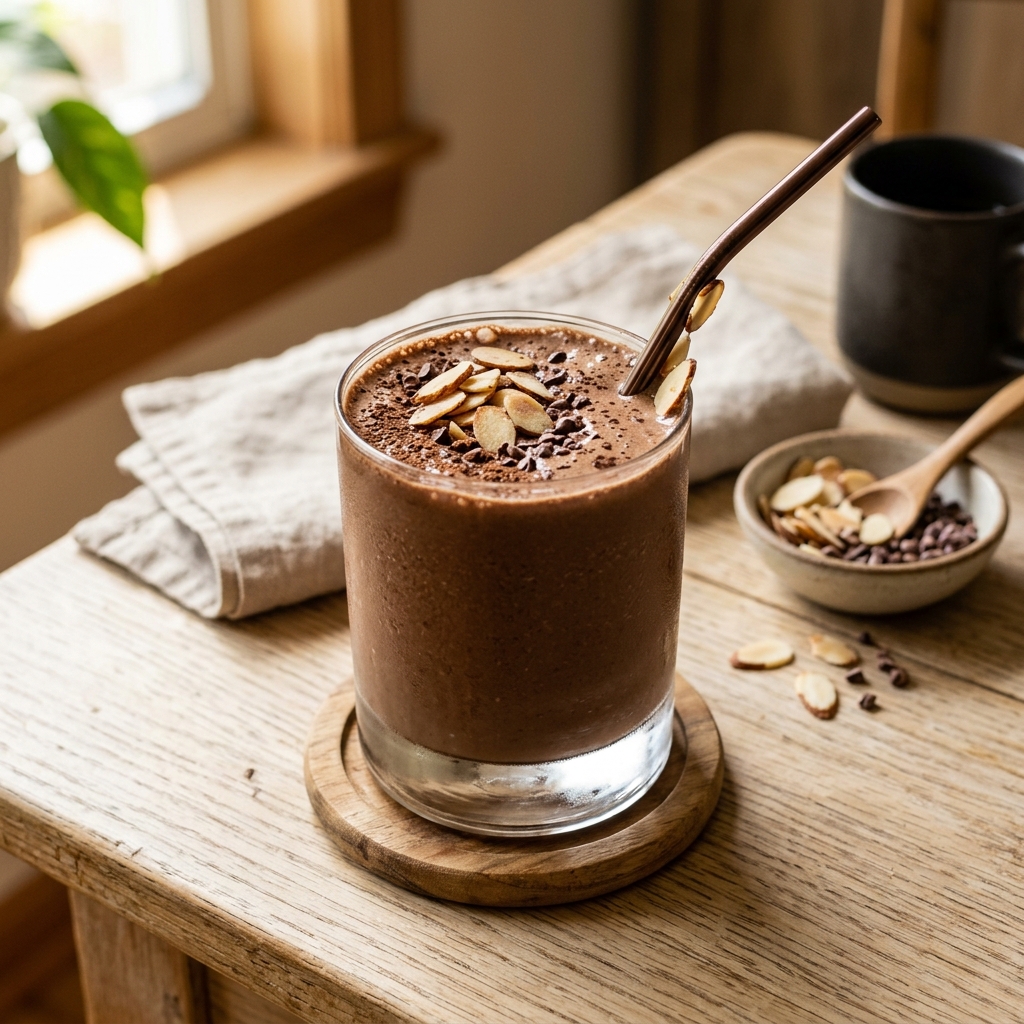
- Trial 3 (The Espresso Mocha Fudge): We used 1 teaspoon of instant espresso powder dissolved in 1 tablespoon of warm water, 2 tablespoons of Dutch-processed cocoa powder, 2 tablespoons of peanut butter, silken tofu, and soy milk, with a frozen banana for sweetness. Result: A thick, luxurious mocha shake with a rich fudge-like texture. The bitterness of the coffee perfectly balanced the sweet banana and rich chocolate.
🍳 Kitchen Equipment Checklist
- High-Speed Blender: Crucial to emulsify the peanut butter and blend the tofu into a silky chocolate cream.
- Measuring Spoons: For exact measuring of cocoa powder and espresso powder.
- Small Mixing Bowl: To dissolve the espresso powder before adding it to the blender.
⚠️ Common Pitfalls & Playbook
Preventing Bitter Cocoa Notes: Unsweetened cocoa powder can taste bitter. Use Dutch-processed cocoa powder, which has been alkalized to reduce acidity. If it still tastes too bitter, add a sweet element like maple syrup, honey, or a ripe banana to round out the flavor.
Dissolving Espresso Powder: Never dump dry instant espresso powder directly into cold milk; it will clump. Always dissolve it in a tiny splash of warm water first to ensure it disperses evenly throughout the shake.
Adjusting Consistency: Tofu shakes can become very thick. If the mixture is too thick for your blender, add soy milk 2 tablespoons at a time until the blades run smoothly.
Our Step-By-Step Cooking Guide
Follow these meticulously documented, kitchen-tested instructions to secure perfect results on your first attempt:
-
Step 1
Dissolve the instant espresso powder in 1 tablespoon of warm water in a small cup. Let it cool for a minute.
-
Step 2
Drain the silken tofu and add it to the blender jar along with the soy milk, peanut butter, and dissolved espresso.
-
Step 3
Add the Dutch-processed cocoa powder, hemp seeds, vanilla extract, and frozen banana slices.
-
Step 4
Blend on high speed for 60-90 seconds until thick, dark brown, and completely smooth. Pour into a glass and garnish with a dusting of cocoa powder or a few coffee beans if desired.


No reviews posted yet. Be the first to cook and review this tested recipe!