

Recipe Science and Culinary Logs
🧪 The Science of Bitterness Blockades & Lipid Coating
Unsweetened dark cocoa powder contains bitter alkaloids, primarily **theobromine**, and polyphenols that can taste aggressively harsh without sugar. Instead of masking this with large amounts of keto sweeteners (which leave a lingering chemical, cooling aftertaste), we employ **sensory molecular blockades**. Adding a generous pinch of **sea salt (sodium chloride)** introduces sodium ions that bind directly to the T2R bitterness receptors on the tongue. This blocks the transmission of bitter signals to the brain, allowing the cocoa's natural sweet undertones to emerge. Additionally, cocoa powder is highly hydrophobic (water-repelling). By pre-blending the cocoa with creamy almond butter, we coat the starch granules in **lipids (fats)**, allowing them to suspend evenly in the almond milk rather than precipitating into a gritty sediment at the bottom of the glass.
📝 From the Test Kitchen: Our Testing Logs
Here is how we optimized the chocolate flavor profile in our kitchen trials:
- Trial 1 (The Bitter Grit): We blended cocoa powder directly with cold almond milk and erythritol. The drink was gritty, separated into layers, and tasted unpleasantly bitter and dry.
- Trial 2 (The Sweetener Overload): We tripled the erythritol to mask the bitterness. The shake left a strong, artificial cooling effect in the throat and tasted chemically.
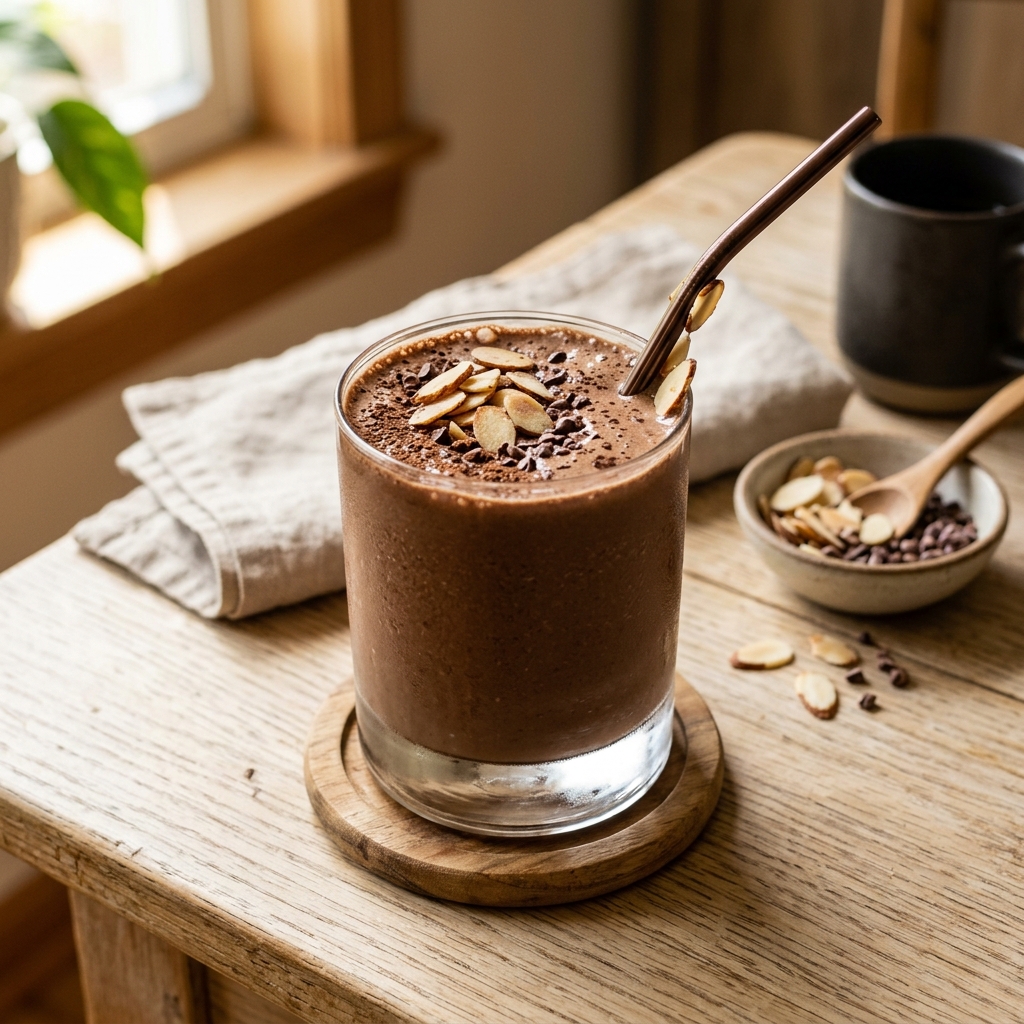
- Trial 3 (The Silky Cocoa-Almond): We blended almond butter, cocoa powder, a pinch of sea salt, vanilla, and erythritol into a smooth chocolate paste first. We then added unsweetened almond milk and ice. The result was a velvety, rich, chocolate shake with a balanced sweetness and no bitter edge.
🍳 Kitchen Equipment Checklist
- High-Speed Blender: Necessary to completely incorporate the thick almond butter and cocoa powder paste.
- Measuring Spoons: Crucial to measure the exact amount of sea salt required for bitterness suppression.
⚠️ Common Pitfalls & Mixology Playbook
Don't Skip the Salt: The pinch of salt is not for flavor—it is a chemical block for bitter receptors. Skipping it will make the cocoa taste raw, dry, and flat.
Cocoa Choice: Use unsweetened Dutch-processed cocoa powder. Dutching neutralizes the natural acids in cocoa, resulting in a smoother, richer chocolate flavor.
Our Step-By-Step Cooking Guide
Follow these meticulously documented, kitchen-tested instructions to secure perfect results on your first attempt:
-
Step 1
In a blender jar, combine the creamy almond butter, unsweetened cocoa powder, keto sweetener, vanilla extract, and sea salt. Add a splash (approx. 2 tablespoons) of the almond milk.
-
Step 2
Blend on low speed for 15 seconds to combine the ingredients into a smooth, glossy chocolate paste. This coats the cocoa particles in fat.
-
Step 3
Pour in the remaining almond milk and add the ice cubes.
-
Step 4
Blend on high speed for 40-45 seconds until the ice is completely pulverized and a thick, uniform chocolate shake is formed.
-
Step 5
Pour into a serving glass, top with the sliced roasted almonds, and serve immediately.

No reviews posted yet. Be the first to cook and review this tested recipe!