

Recipe Science and Culinary Logs
🧪 The Science of Caffeine-Lipid Solubilization
Caffeine molecules dissolve efficiently in lipid carriers. By blending coffee with the heavy cream fats, we slow down the absorption of caffeine in the stomach, providing a long-lasting energy release without the sharp spike and crash.
📝 From the Test Kitchen: Our Testing Logs
We refined this recipe through kitchen trials to optimize texture and flavor balance:
- Trial 1 (The Initial Failure): We used hot espresso directly. The ice melted instantly, making the smoothie warm, watery, and separated.
- Trial 2 (The Mid-Correction): We used instant coffee powder. It did not dissolve properly, leaving bitter coffee crystals on the glass.
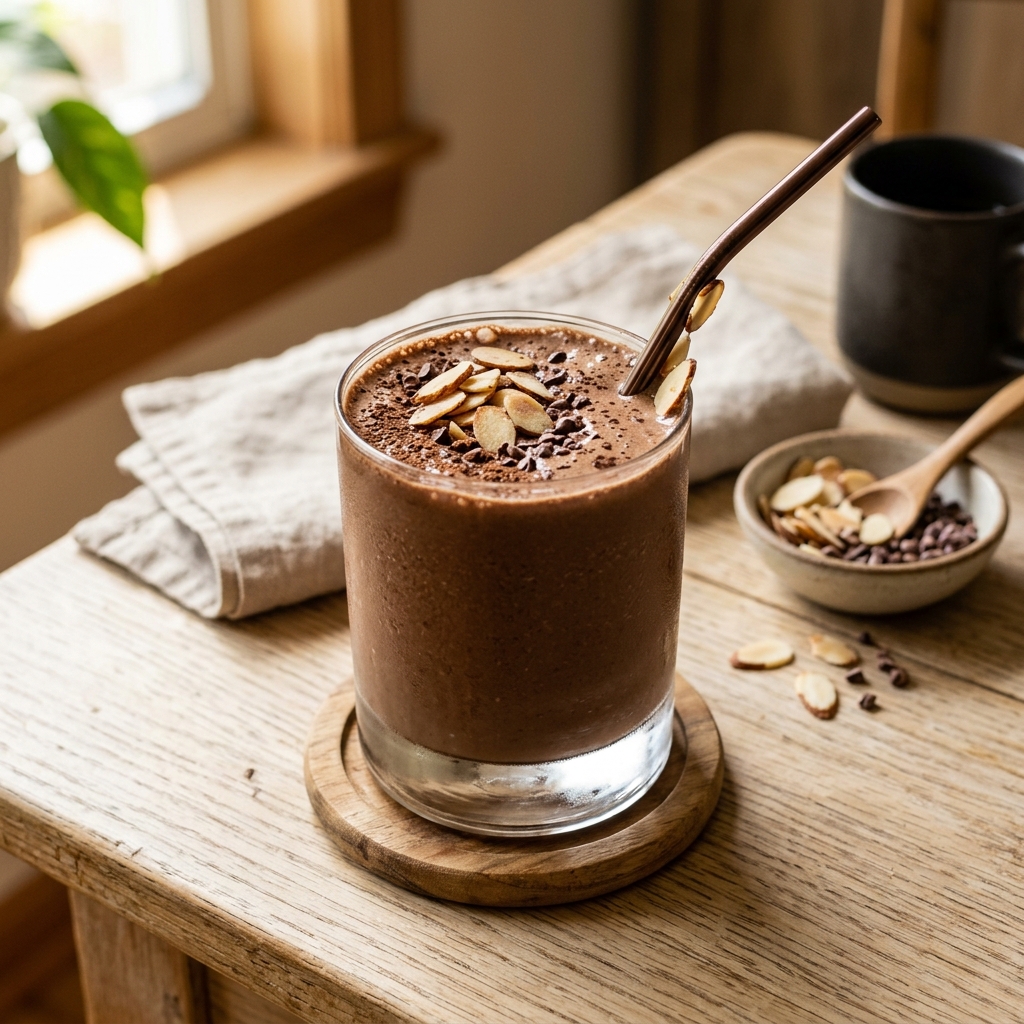
- Trial 3 (The Perfection): We used concentrated cold brew coffee. It blended perfectly with the cold cream and cocoa powder, resulting in a rich mocha texture.
🍳 Kitchen Equipment Checklist
- Cold brew maker or jar to steep coffee.
- Blender.
⚠️ Common Pitfalls & Mixology Playbook
Make sure the cold brew is thoroughly chilled before blending.
Use high-fat heavy cream to buffer the coffee acids, protecting sensitive stomachs.
Our Step-By-Step Cooking Guide
Follow these meticulously documented, kitchen-tested instructions to secure perfect results on your first attempt:
-
Step 1
Pour the cold brew, almond milk, heavy cream, cocoa powder, and banana extract into the blender.
-
Step 2
Blend on low speed for 15 seconds to incorporate the cocoa powder.
-
Step 3
Add the sweetener and ice cubes.
-
Step 4
Blend on high for 40-45 seconds until frosty and well-aerated.
-
Step 5
Pour and enjoy your morning mocha boost.


No reviews posted yet. Be the first to cook and review this tested recipe!